

Are you a small business owner finding it hard to get noticed on social media? You’re not alone. Today, having an online presence is key. But, social media marketing can be tough to handle.
Social media is a big deal for brands. Over 72% of Americans use it. It’s a great chance for small businesses to grow.
Facebook has over 3 billion users every month. Instagram has 130 million users who tap on shopping posts. These sites are more than just for chatting. They’re places where 60% of people find new things to buy.
But making a good social media plan is hard. You need to know who you’re talking to, pick the right places to share, and make content that people want to see. This guide will help you improve your social media and attract more people.
Key Takeaways
- Social media is essential for small businesses to increase brand awareness and reach new customers
- Understanding your target audience helps in selecting the most effective social media platforms
- Consistent, quality content creation is crucial for engaging and growing your audience
- Visual content and varied formats can significantly boost engagement rates
- Analyzing data and adjusting strategies are key to social media success
Understanding the Importance of Social Media for Small Businesses
Social media has changed the game for small businesses. It has over 4 billion users every day. These platforms are great for growing your brand and keeping up with trends.
Introducing Your Brand to New Audiences
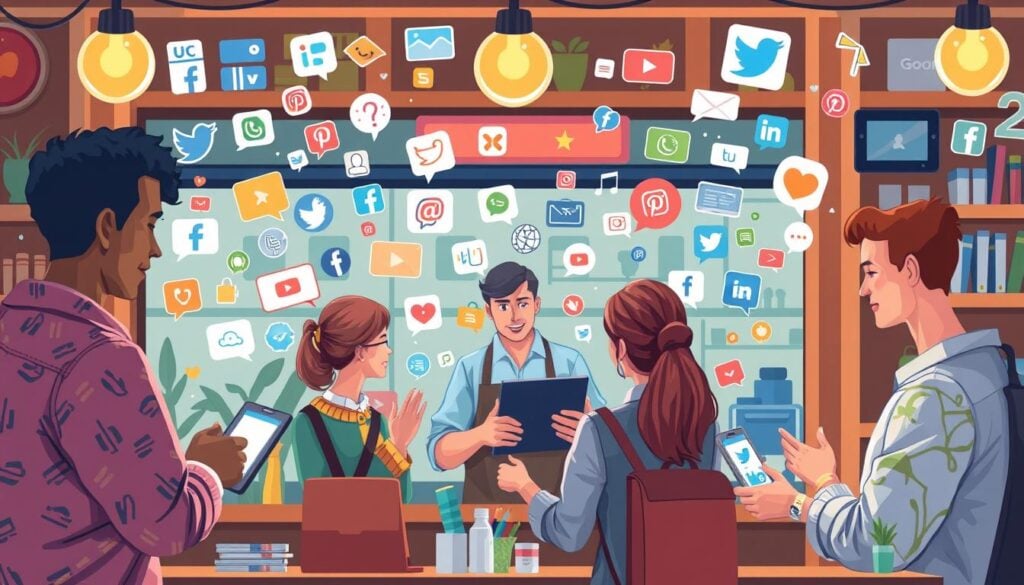
Social media lets you meet new customers. Instagram, for instance, helps 83% of users find new brands. This is key for small businesses wanting to grow.
By making fun content and using ads, you can reach more people. This way, you can show your brand to those who might not have found you before.
Enhancing Customer Engagement
Social media is more than just sharing. It’s about making connections. Social media tips help 88% of people make buying decisions.
By talking back to comments, running contests, and sharing secrets, you can make a strong social media plan. This turns followers into loyal customers.
Staying Current with Industry Trends
Social media gives you a peek into your industry. It shows you what’s popular and what’s not. This info is key for staying ahead.
By being active on sites like Twitter, LinkedIn, and Instagram, you can catch trends early. This helps you adjust your business plan to stay competitive.
“Social media is not just an activity; it is an investment of valuable time and resources. Surround yourself with people who not just support you and stay with you, but inform your thinking about ways to WOW your online presence” – Sean Gardner
Setting Clear Goals for Your Social Media Strategy
A strong social media strategy starts with clear goals. Your goals should match your marketing plans and brand strategy. This helps you make a plan for success.

When setting your social media goals, aim for specific results. You might want to increase brand awareness or get more website visitors. Make sure your goals are clear and can be measured over time.
Use the SMART framework for your goals. A SMART goal is Specific, Measurable, Achievable, Relevant, and Time-bound. For example, “Grow our Facebook followers by 20% in three months with special content and ads.”
“The global social media market grew from $193.52 billion in 2022 to $231.1 billion in 2023 and is projected to reach $434.87 billion in 2027.”
Always check and change your social media goals. As your business grows and trends change, so should your goals. Being flexible keeps your strategy working well and true to your brand.
Identifying and Understanding Your Target Audience
Knowing who your audience is is very important for social media success. Small businesses need to really understand their customers. This helps them make content that really speaks to people.
Leveraging Social Listening Tools
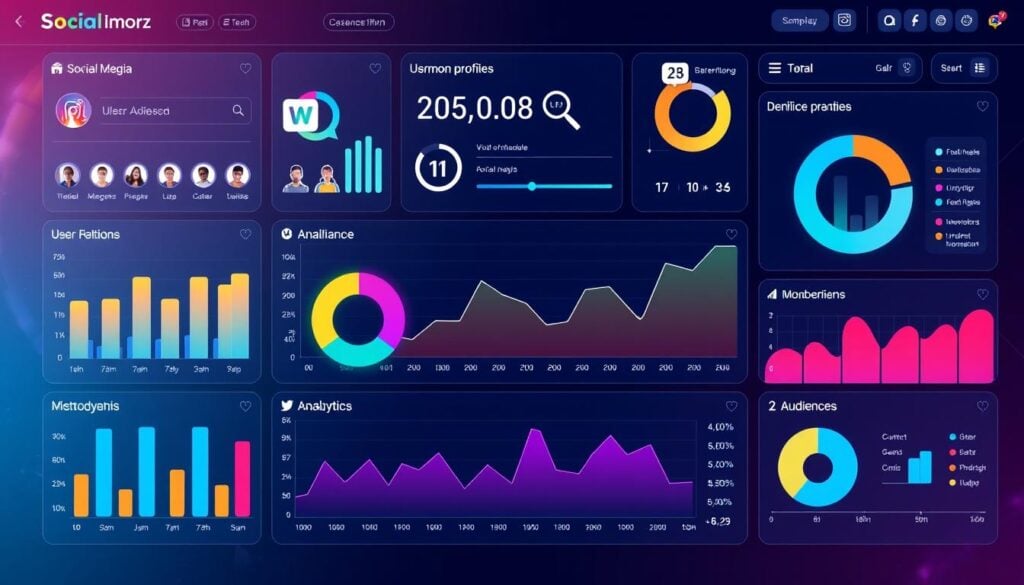
Social listening tools are very helpful for small businesses. They let you hear what people say about your brand online. You can see trends and how people feel. This helps shape your social media plan.
For example, Talkwalker is a tool that tracks mentions and analyzes conversations.
Analyzing Demographic Data
Looking at demographic data is key to finding your audience. Things like age, gender, location, and income matter. Social media platforms give you a lot of about your followers. Use this to make your content better.
Did you know 18% of TikTok’s users are women aged 18-24? Knowing this helps you pick the right platform for your message.
Creating Buyer Personas
Buyer personas make your target audience real. They are based on real data and are like fictional characters. They include things like job titles, interests, and challenges. This helps you make messages that really connect.
For example, the Calm app targets young to mid-age adults who are stressed. They make content that really speaks to this group’s needs.
“21% of consumers follow brands on social media because their values align with their beliefs.”
Your target audience might change over time. So, keep updating your personas as you learn more. This keeps your social media efforts effective.
Choosing the Right Social Media Platforms
Choosing the right social media platforms is key for small businesses. Each platform has its own features and audience. This makes picking the right one important for your strategy.
Facebook has 3.065 billion users every month. The biggest group is 25-34 years old, at 29.9%. It’s great for businesses that want to reach more people and talk to customers.
Instagram has 2 billion users monthly. It’s loved by people under 35, with over two-thirds of users in this age group. It’s perfect for businesses that want to connect with younger people.
LinkedIn is best for B2B businesses. It has 1 billion users monthly, with 60% being 25-34 years old. It’s also good for professional networking, with 43.7% female and 56.3% male users.
TikTok is very popular, especially with the young. It has 1.7 billion users monthly, with 36.2% being 18-24 years old. It’s a great choice for businesses that want to reach Gen Z.
Make sure to pick a platform that fits your business goals and audience. Look at what your competitors are doing on social media. This can help you see which platforms work best for your industry.
Creating Compelling Content for Your Small Business
Quality content is very important for social media success. For small businesses, making good content is key to getting and keeping customers. A good plan can help you stand out online and get more people talking about you.
Developing a Content Calendar
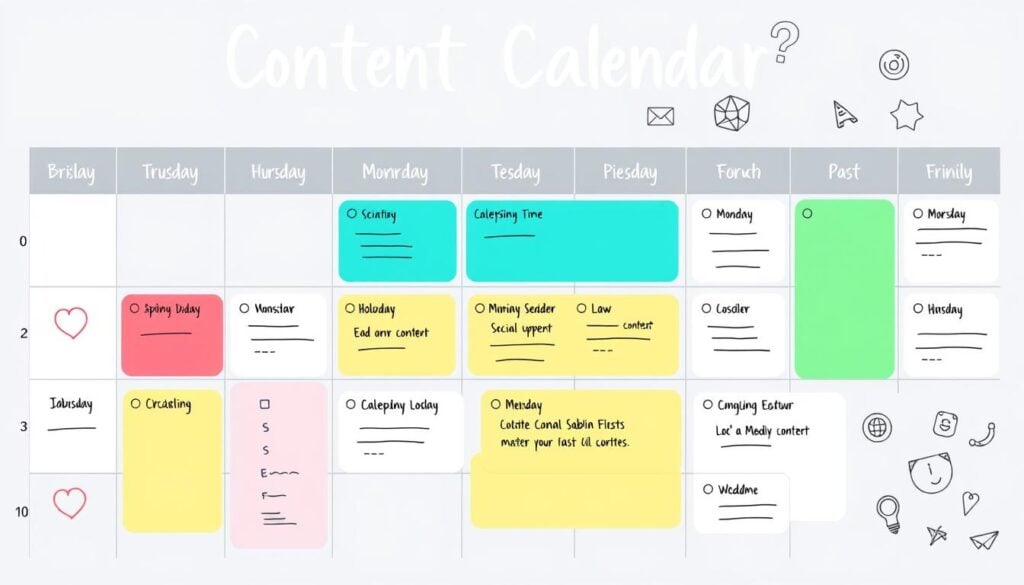
A content calendar is key for organizing your social media. It helps match your posts with big events, holidays, and your business’s milestones. Planning ahead makes sure your content is always on point and timely. Businesses that blog often get 55% more visitors than those that don’t.
Utilizing Visual Content
Visual content grabs people’s attention. Use infographics, images, and videos to make your posts stand out. Mix up your content to keep things interesting. Graphics can really help get more people talking about your posts.
Crafting Engaging Captions
Captions are your chance to talk to your audience. Share your business story, customer experiences, or what inspires your products. Be friendly and ask questions to get people talking. Don’t forget to use hashtags to reach more people.
“Posting valuable content regularly shows a commitment to the audience and can boost reach, improve engagement, and drive more clients.”
Use tools like Google Analytics to see how your content is doing. Look at page views and engagement to see what works. Use this info to make even better content that your followers will love.
Leveraging Video Content to Boost Engagement
Video marketing is changing how small businesses talk to their audience. A huge 89% of people say watching a video helped them decide to buy something. This shows how important videos are for selling and making a brand known.
Live video is great for getting people to talk about your brand on social media. It lets businesses talk to their audience right away. They can answer questions and show off what they sell. This makes viewers feel like they’re part of something real.
Even though it’s powerful, 66% of marketers don’t make videos because they think it’s hard and takes too long. But, the good it does is worth it. For small businesses, videos do many things:
“52.1% of small businesses use video for product education, 50.9% for brand awareness, and 49.1% for customer engagement.”
To make your video marketing better, try using different kinds of videos. Show how your products work, give a peek behind the scenes, and share what your customers say. Using these types of videos can help you get more people talking about your brand online.
Social Media for Small Businesses: Best Practices and Strategies
Small businesses can grow by using social media. Good social media practices help connect with customers. Let’s look at ways to improve your online presence and engage more people.
Consistency in Posting
Posting often keeps people interested. Businesses that post every day get 30% more engagement. Make a plan for your posts to keep things interesting.
Share updates, behind-the-scenes looks, and stories from customers. This makes your content exciting and varied.
Engaging with Your Audience
Talking to your followers is important. Answer comments and messages quickly. Use polls and contests to get people involved.
Small businesses that talk to their followers see a 25% increase in loyalty. Personal touches make a big difference.
Using Hashtags Effectively
Good hashtags can help more people find you. Find popular hashtags in your field. Use a mix of broad and specific hashtags.
Stick to 3-5 hashtags per post for best results. Keep up with trends to stay relevant.
“Social media is a powerful touchpoint for connecting with new customers.”
By following these tips, small businesses can grow a lot. Some see their followers double in just a few months. Success comes from setting goals, being consistent, and truly connecting with your audience.
Collaborating with Influencers and Other Businesses
Small businesses can grow on social media by working with influencers and other companies. Partnering with micro-influencers, who have 10,000 to 100,000 followers, can really help. These partnerships often lead to more people engaging and buying from your business.
A Nielsen study found that 92% of people trust micro-influencers more than ads. This trust means more sales for your business. By building a strong brand presence on social with influencers, you can reach new people and be seen as credible.
Creating content together is important in influencer partnerships. Let influencers decide what they post, as they know what their followers like. This way, you get content that feels real and gets people talking on social media.
“Influencer marketing is not just a trend; it’s a powerful tool for small businesses to amplify their brand visibility and ignite social media engagement.”
The influencer marketing world is booming, expected to hit $22.2 billion by 2025. Small businesses can benefit by focusing on micro-influencers. They offer high engagement and real connections with their followers. By picking influencers who share your brand’s values, you can make campaigns that really work.
Utilizing Paid Advertising on Social Media
Social media ads are great for small businesses. People spend a lot of time on social media. This means you can easily find your customers.
Setting Up Targeted Campaigns
It’s important to make campaigns that hit the mark. Social media knows a lot about its users. For example, 81% of people use Instagram to check out products.
Analyzing Ad Performance
It’s vital to watch how your ads do. Each platform has tools to see how well your ads are doing. Did you know Facebook users click on 12 ads a month?
Optimizing Ad Spend
To get the most from your ads, make sure your content is good. Use posts that worked well before for your ads. Most people use phones to get on social media. Good social media plans can make your brand more known and liked.
“Social media advertising allows for segmentation of the audience to reach specific target audiences more effectively.”
By using targeted ads, checking how they do, and spending wisely, you can make the most of social media for your business.
Measuring Success and Adjusting Your Strategy
Tracking your social media performance is key to growing your small business online. Social media analytics offer a goldmine of data to gauge your efforts’ impact. For instance, an addiction treatment center saw a 700% rise in comments and 255% more likes in just one quarter by analyzing their metrics.
Focus on meaningful performance metrics like engagement rates, reach, and conversions. A clothing brand found that shares and comments on Instagram posts featuring new products signaled strong audience connection. High impressions are great, but balance them with engagement metrics to truly understand how your content resonates.
Strategy optimization is an ongoing process. A travel agency tracked conversion rates on social media posts about travel packages, identifying that user-generated content featuring past travelers performed best. This insight helped them adjust their content strategy for better results.
Remember, social media analytics go beyond likes and shares. Monitor traffic metrics, time spent on your page, and sales conversion rates. By continuously measuring, learning, and adjusting, you’ll refine your strategy and achieve your social media goals more effectively.

Leave a Reply