

Do you find it hard to keep up with new social media posts? A good social media content calendar can help a lot. It makes your social media plan better, making your posts more engaging.
A social media content calendar is not just a schedule. It’s a plan that helps you post content regularly. This way, you can mix up your posts, post at the best times, and meet your marketing goals.
To make a great social media content calendar, follow some important steps. First, check how you’re doing on social media now. Then, set clear goals for what you want to achieve. Next, mix up your content and post at the same time every day. Each step is key to doing well on social media.
Key Takeaways
- A social media content calendar streamlines content planning and posting
- It helps balance evergreen and timely content effectively
- The calendar facilitates coordination among team members
- It allows for tracking important dates and relevant hashtags
- Using a calendar can improve the overall effectiveness of social marketing strategies
- It enables better performance tracking and analysis of social media metrics
Understanding the Importance of a Social Media Content Calendar
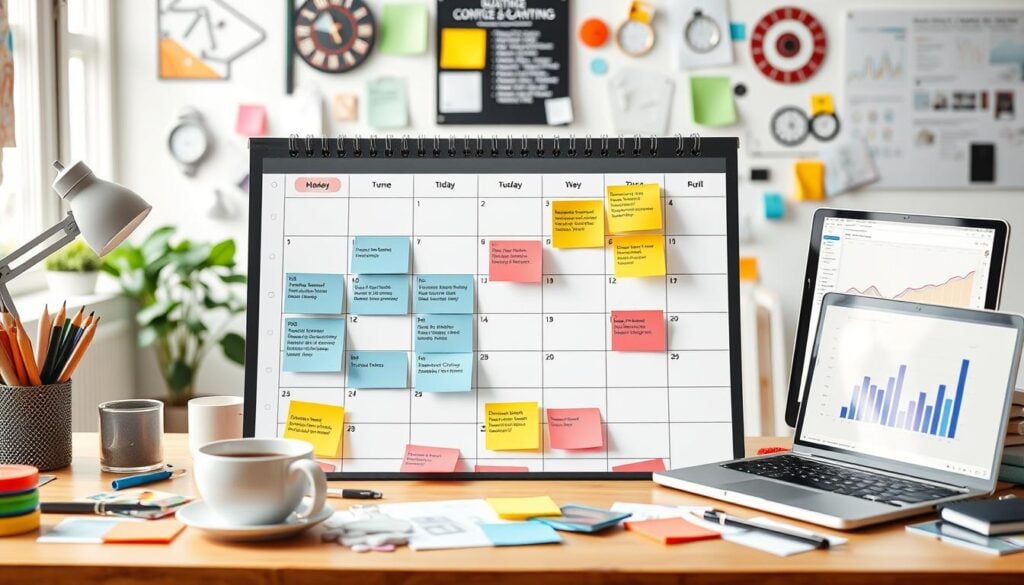
A social media content calendar is a big help for planning posts. It’s a tool that lets you schedule your posts on different platforms.
Defining a social media content calendar
It’s like an editorial calendar for social media. You plan what to post, when, and where. This saves time for busy social media managers.
Benefits of using a content calendar for social media
Using a content calendar has many benefits. It keeps your posts regular, which is key for being active online. It helps you make better content, not just more of it.
It also helps your team work better together. And it makes your content more visible in your company.
“A well-planned social media calendar is like a roadmap for your online presence. It guides you, keeps you on track, and helps you reach your destination more efficiently.”
How a calendar streamlines social media management
A calendar makes managing social media easier. It lets you schedule posts ahead of time, catching mistakes early. It’s a place to track how well your posts are doing.
With a calendar, you can mix different types of posts. This keeps your audience interested without feeling overwhelmed.
Auditing Your Current Social Media Presence
Doing a social media audit is key to improving your online plan. It means looking closely at your platforms, checking how your content does, and finding trends. This helps you see what works and what doesn’t, making your social media plan better.

First, check important numbers for each social account. Look at likes, shares, and comments. See which posts do best. This shows what your audience likes.
The 80/20 rule is important in social media. It means 80% of your success comes from 20% of your work. Use this to focus on what gets the most attention. Plan your content wisely to have more impact.
Also, know who follows you. This helps make content they’ll like. And make sure your content works on phones. Almost half of all internet use is on phones.
“A thorough social media audit connects you better with your target audience and uncovers new opportunities for growth.”
Do your audit every three months. This lets you see how you’re doing and make changes. Regular checks help you improve your social media plan and get better results.
Identifying Your Target Audience and Social Platforms
Knowing who you’re talking to is very important for social media. Look at who they are and what they like. This helps you make content that they will enjoy.
Analyzing Audience Demographics and Preferences
First, make a picture of who your buyers are. Think about their age, where they live, what they like, and how they use the internet. Use tools to learn about your followers. This helps you make content that they will like.

Selecting the Right Social Media Channels
Pick the places where your audience likes to hang out. For example, if you’re talking to young people, try TikTok or Instagram. If it’s professionals, LinkedIn might be better. The platform you choose affects how well your content does.
Tailoring Content to Platform-Specific Formats
Every social media site is different. Instagram likes pretty pictures and short videos. Twitter is all about short texts. Make your content fit each site’s style for better results.
“Content customization is crucial for social media success. What works on one platform may not work on another.”
The main goal is to make content that your audience will love on their favorite sites. Focus on making them happy, choosing the right places, and making content that fits each site. This will help you do well on social media.
Setting Clear Goals and Objectives for Your Social Media Strategy
It’s important to set goals for social media. Your goals should match your business’s big plans. Common goals include making your brand known, getting more leads, and getting people to interact more.
Use the SMART framework for your marketing goals. This means your goals should be Specific, Measurable, Achievable, Relevant, and Time-bound. For instance, you might want to get 20% more Instagram followers in three months.
Tracking how well you’re doing is key. Look at things like how many people see your posts, how much people interact with them, and how many sales you get. Tools like Hootsuite can help track these KPIs, so you can change your plan if needed.
“Clear goals provide direction for content creation and help evaluate the effectiveness of your social media strategy.”
Every social platform has its own people. Make sure your content fits what people like on Facebook, Twitter, or LinkedIn. By setting clear goals and watching your progress, you’ll make your social media better and more effective.
Creating a Social Media Content Calendar
A social media content calendar is very important. It helps you plan and organize your social media. Let’s see how to make a good calendar for your content strategy.
Choosing the Right Tools
Choose tools that match your needs. Spreadsheets are good for small teams. Big groups might like special social media platforms. These tools help schedule posts and track how well they do.

Structuring Your Calendar
Make your calendar easy to use. Put in publish dates, social networks, content types, and what to say. Don’t forget space for media, links, and how well it did. This makes your social media work smoother.
Key Elements to Include
Your calendar should have important parts. List what campaign it’s for and if it’s approved. Add UTM tracking links to see how well it does. Use colors to show different content types. This makes your calendar very useful.
“80% of your content should inform, entertain, or educate your audience, while the remaining 20% should promote your products or services.”
Stick to this rule when planning your content. It helps balance useful and promotional posts. A good calendar keeps you on track, improving engagement and reach.
Developing a Diverse Content Mix
A good content strategy needs variety. Mix different types of content to keep people interested. This way, you meet different tastes and keep your audience coming back.
Balancing Promotional and Value-Driven Content
Balance your posts. Use one promotional post for every two that teach or entertain. This keeps things interesting and promotes your brand gently.
Incorporating Different Content Types
Change up your content to keep it exciting. Try blogs, videos, infographics, and polls. For example, TikTok loves short videos, while LinkedIn likes longer texts. Make your content fit each platform for the best results.
Planning Timely and Evergreen Content
Plan both timely and evergreen content. Timely posts are about now, while evergreen ones stay good all year. This keeps your feed fresh and valuable.
“A diverse content mix is the secret sauce to keeping your audience hooked and coming back for more.”
Your content strategy should mix promotional and valuable content. Focus on variety to increase engagement and build a loyal following on social media.
Establishing a Consistent Posting Schedule
Posting the same amount of times each week is important. It keeps your followers interested. Each social media site likes posts at different times.
Instagram likes 3-5 posts a week, with Stories twice a day. Facebook fans enjoy 1-2 posts daily. Twitter needs 2-3 tweets a day. LinkedIn likes 1-2 posts daily. TikTok fans watch 3-5 videos a week. Pinterest wants at least one pin a week.
Finding the best time to post is very important. Use tools to track when your followers are online. This way, your posts get seen and liked more.
“Consistency is key in social media. Your audience should know when to expect new content from you.”
Change up what you post to keep things interesting. Use pictures, videos, blog posts, and content from others. Plan your mix of content ahead of. This way, you always have something good to share.
Collaborating and Streamlining Workflow with Your Team
Working together is important for a good social media presence. A good plan helps everyone work better and keeps your brand the same everywhere.
Assigning Roles and Responsibilities
Make it clear who does what in social media. This includes people who make content, design, edit, and approve it. This way, no one does the same thing twice.
Implementing Approval Processes
Have a plan for checking work quality. This is very important for places like finance and healthcare. For example, healthcare teams must follow HIPAA rules when they post online.
Ensuring Brand Consistency
Make rules for how your brand sounds, looks, and talks. This keeps your posts the same everywhere. Studies show that 75% of businesses that post regularly get more trust and attention from people.
“A centralized hub for teams through project-management tools has shown to improve collaboration and communication within teams by 70%.”
Use tools to help your team talk and share ideas. Having regular meetings helps everyone stay on the same page. This way, you can make content that people will enjoy.
Measuring and Analyzing Social Media Performance
Social media analytics are very important. They help shape your strategy. The 2023 State of Social Media report shows over half of business leaders use these insights.
Start by watching engagement rates, reach, and impressions. These metrics tell you how your content does with your audience. For example, video views show awareness, and reach shows unique viewers per post.
Check your follower growth rate to see if your audience is growing. Use this formula: (Followers gained / initial followers) x 100. This tells you if your content attracts new followers.
“Almost three-quarters of consumers expect a response within 24 hours on social media.” – The Sprout Social Index™
Customer satisfaction scores (CSAT) show how people see your brand. Regularly check these scores to find ways to get better. Tools like Keyhole or Brand24 give you deep insights into your audience and trends.
Remember, a strategy based on data is key to social media success. Use these insights to improve your content, posting times, and overall performance. This way, you make smart choices and get better results for your brand.
Conclusion
Creating a good social media strategy is very important. With so many people online, a planned content calendar is key. It keeps your brand seen, saves time, and boosts awareness.
Planning your content is where creativity meets strategy. A calendar lets you plan for special days and new products. This makes your posts more interesting and keeps people coming back.
Choosing the right places to share your content is also important. A good calendar lets you change plans if needed. It keeps your brand voice the same everywhere. By looking at your numbers and improving your plan, you can really shine online.
In short, a social media content calendar is a path to success. It makes your work easier, helps you use your resources well, and gives you an edge. So, start planning your content now and watch your online presence grow!

Leave a Reply